Mindfulness, monks, and managing pain: What a Walk for Peace can teach us
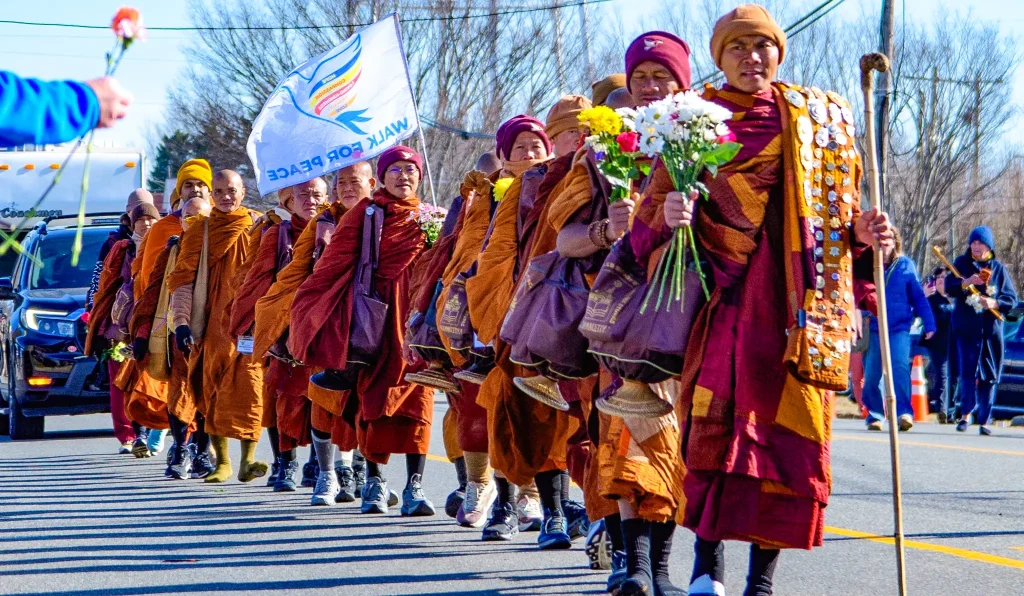

Sometimes the most profound lessons arrive in the most unexpected ways, such as a group of Venerable Monks on a Walk for Peace. On October 26, 2025, in Fort Worth, Texas, 19 Buddhist monks began what is projected to be a 2,300-mile pilgrimage on foot. One step at a time, they are walking from Texas to Washington, D.C. to raise “awareness of peace, loving kindness, and compassion.”
(Photo above: Venerable Monks on the Walk for Peace, arrive in Liberty, NC, for a lunch break and talk to a large crowd, before walking east through our state on their way to Washington, DC. Photo: Paul Weiss.)
Recently, Angie and I had the privilege of being in the presence of these Venerable Monks and attending their talk at Truist Point Stadium in High Point, NC. Yes, a baseball stadium filled, not with hot dogs and the sound of managers arguing with umpires, but with stillness, compassion, and a whole lot of mindful breathing. It was both humbling and inspiring.

So…what is mindfulness, really?
Mindfulness is the practice of paying attention to the present moment on purpose and without judgment. It sounds simple—and it is—but that doesn’t mean it’s easy. Most of us spend our days replaying the past or worrying about the future, often without realizing it. Mindfulness gently invites us back into now: this breath, this step, this sensation.
The Monks reminded us (with kindness and even a few laughs) that mindfulness isn’t about emptying your mind or becoming blissfully calm 24/7. It’s about noticing what’s happening—inside your body and inside your thoughts—and meeting it with curiosity rather than resistance.
Mindfulness and pain: what’s the connection?
When it comes to pain, the mind and body are deeply connected. Pain isn’t just a physical sensation; it’s also influenced by stress, fear, past experiences, and expectations. When we’re tense, anxious, or constantly bracing for pain, our nervous system stays on high alert and pain often feels louder and more persistent.
Mindfulness helps by:
- Reducing stress and muscle tension, which can amplify pain
- Calming the nervous system, shifting it out of “fight, flight, or freeze” mode
- Changing our relationship with pain, so it becomes something we observe rather than something that completely takes over
Instead of immediately reacting with “This is awful—how do I make it stop?” mindfulness creates space for a different response: What am I noticing right now? Where is the tension? What can I do to better manage this?
Small practices, real relief
Mindfulness doesn’t require hours of meditation or a mountaintop retreat. It can be as simple as noticing your breath while waiting at a red light, gently scanning your body for areas of tension, or bringing awareness to how your feet feel on the ground as you walk. These small moments add up, helping retrain the brain and nervous system to feel safer and often less painful.
Mindfulness in physical therapy
This is where mindfulness beautifully intersects with physical therapy. I often incorporate mindfulness techniques into treatment to help patients lessen pain and move with greater ease. By encouraging patients to slow down, tune into their bodies, and notice how movements feel rather than forcing them, pain often becomes less threatening and less intense.
When patients learn to move mindfully, they gain confidence, reduce unnecessary guarding, and reconnect with their bodies in a more compassionate way. It’s not about ignoring pain; it’s about listening to it without fear and responding with intention.
A guided breath meditation for pain relief (1–2 minutes)
Settle into a comfortable position, allowing your body to be supported. There is nothing you need to fix right now.
Bring your attention to your breath.
Notice the inhale… and the slow, steady exhale.
As you breathe in, imagine creating a little more space inside your body. As you breathe out, invite any unnecessary tension to soften.
If you notice pain, see if you can observe it with curiosity rather than resistance. You are not the pain. You are the one noticing it.
Let the breath move gently around the uncomfortable area, like warm air flowing through a tight place.
Inhale… space. Exhale… ease.
Continue here for a few breaths, allowing your nervous system to settle.
When you’re ready, gently return your attention to the room, bringing with you whatever sense of relief is available.
A gentle takeaway
Standing in the presence of the Venerable Monks as they walk for peace, one thing became very clear: healing doesn’t always come from doing more. Sometimes it comes from noticing more. Mindfulness invites us to walk—quite literally and figuratively—through life with a little more awareness, a little more self-care, and often, a little less pain.
And really, if mindfulness can find its way into a baseball stadium, it can probably find its way into your daily life too.


