

Small, Intentional, Achievable: A Next-Step Approach to Health and Healing with Marilyn’s Way and the McKenzie Method

Sometimes the hardest part of getting better is figuring out where to begin.
I learned that many years ago, when I was in my early 20s, I was diagnosed with Chronic Fatigue Immune Dysfunction Syndrome (CFIDS). At its worst, I had to take a semester away from college.
I couldn’t walk to the mailbox. I spent hours in a warm bath trying to ease the pain.
Unless you’ve lived with chronic pain or fatigue, it can be difficult to understand how overwhelming ordinary life can become. Walking to the kitchen for a glass of water can feel like a major undertaking.
Laundry, cooking, cleaning, exercise—all the things we’re “supposed” to do—can begin to pile up physically and mentally.
Marilyn Foster understands that, too.
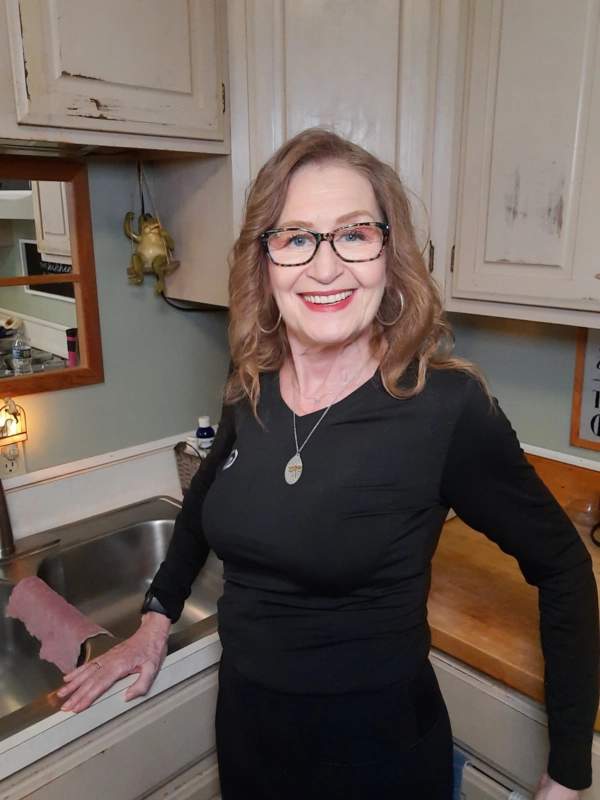
Marilyn has lived with fibromyalgia and chronic pain since 1989. At one point, she was also dealing with a home that had become so cluttered and overwhelming that she didn’t know where to begin.
Then a friend offered a remarkably simple suggestion: Try getting dressed every day.
That’s it. Not clean the whole house. Not reorganize your life. Not create a complicated new routine. Get dressed.
That small suggestion became the beginning of what eventually grew into Marilyn’s Way, her approach to decluttering, homekeeping, and intentional living. And that’s one reason Marilyn’s Way resonated so strongly with me.
It started for me with “The 9s”

That original suggestion—get dressed—became the first of Marilyn’s “9 Daily Habits to Keep Your Home Clean.”
The nine habits are simple: get dressed to shoes, swish and swipe the bathroom, decide what’s for dinner, do a load of laundry, tidy for 15 minutes, make dinner early, shine the kitchen sink, lay out tomorrow’s clothes, and prepare a “launch pad” with what you’ll need for the next day.
None of these sounds earth-shattering. And that’s precisely the point. Marilyn understands that when you live with chronic pain, fatigue, brain fog—or simply an overwhelming season of life—knowing what to do isn’t always enough.
It helps to know how to make it manageable and why it’s worth doing. Even that first habit isn’t really about clothes. Getting dressed signals psychologically that the day has begun.
And “dress to shoes” doesn’t mean putting on your best outfit. For someone living with chronic pain, even the fabric or style of clothing can matter. It simply means getting into something comfortable that helps mark the beginning of your day.
The other habits work in much the same way
Swishing the toilet and wiping the sink while you’re already in the bathroom keeps things sanitary without creating a separate cleaning project.
Deciding what’s for dinner early eliminates one decision when your energy may be lowest. One load of laundry prevents an exhausting mountain from accumulating.
And a shiny kitchen sink at bedtime means you don’t begin tomorrow staring at yesterday’s mess.
Small. Intentional. Achievable.
Marilyn also encourages people to make the system their own. I eventually turned her 9 into my own “Daily Dozen,” adding things that matter to my well-being—journaling, a lunchtime nature walk, exercise, a nighttime ritual, and meditation.
For me, the checklist itself matters. Chronic illness can bring brain fog and lethargy along with physical symptoms. A routine means I don’t have to continually ask myself, “What am I supposed to be doing next?”
Marilyn recommends finding the order that works for you and repeating it until the habits become more automatic, freeing energy for other parts of your life.
Where Marilyn’s Way and the McKenzie Method come together
This is where I think Marilyn’s Way and the McKenzie Method of Mechanical Diagnosis and Therapy (MDT), the approach we use at Cedar Hill Physical Therapy & Wellness, can complement each other particularly well.
When you’re hurting, being told all the things you should be doing can feel defeating. Walk more. Exercise. Strengthen this. Stretch that. Lose weight. Improve your posture. It can sound like another impossible pile of laundry.
The McKenzie Method takes a different approach. Rather than beginning with a generic collection of exercises, an MDT evaluation looks carefully at how your symptoms respond to specific movements and positions. That response helps Paul the Physical Therapist determine which movement—or sometimes which change in posture or activity—is most appropriate for you at that point in your recovery.
When you’re already in pain, the last thing you need is to spend limited time and energy doing a long list of exercises that may not address your problem—and, in some cases, may aggravate
your symptoms.
Instead, maybe you need one particular stretch instead of 3 or 4 exercises. Maybe it’s a few repetitions performed several times during the day. Maybe it’s changing the way you sit, lift or move. You learn what to do, why you’re doing it, how your body responds, and what to do next.
And here’s where I see Marilyn’s Way fitting beautifully alongside it. Marilyn’s Way helps you build small, intentional actions into the rhythms of an ordinary day.
A routine for healing
MDT gives you a specific physical action that may help you manage your symptoms. Instead of your PT exercise becoming one more enormous item on a list of things you “should” be doing, it can become part of the routine you’ve created.
Maybe you do your movement after you dress to shoes. Maybe while dinner is already prepped and cooking. Maybe after your 15-minute tidy. The specific routine isn’t important. Finding a place where it fits into your life is.
And because Marilyn encourages us to make her system our own, there’s room for physical therapy right there in it. I know because I did exactly that: when I turned Marilyn’s 9 into my Daily Dozen, stretches became one of the 12.
The McKenzie Method helps answer the question, “What does my body need?”
Marilyn’s Way can help answer, “How do I make doing it part of my life?” That’s more than a similarity. The two approaches can support each other.
Doing something changes something
Perhaps that’s the lesson from Marilyn’s Way that has stayed with me most. When everything feels overwhelming, we tend to look at the whole problem. The messy house. The mountain of laundry. The painful back. The weak leg. The long recovery ahead.
And then we freeze.
Instead, what if we ask:
What is one thing I can reasonably do today?
Swish the toilet.
Do the movement your physical therapist identified for you.
Put away one load of laundry.
Prepare dinner while your energy is good.
Do the next small thing.
And if today you can only manage one or two things instead of nine?
They still count.
Small actions restore something larger than order to a home or movement to a body. They restore a sense of agency—the understanding that even when we can’t control everything that’s
happening to us, there may still be something we can do to make life a little better.
That’s what I love about Marilyn’s Way. It’s also at the heart of the kind of physical therapy we believe in at Cedar Hill. Find what helps. Make it manageable. Make it yours. And keep going, one achievable
action at a time.